
A New Asset Class Is Emerging, Built on Home Equity
07/13/2026
For generations, homeowners have viewed home equity as long-term wealth—valuable, but largely inaccessible until the property was sold or refinanced. That assumption is beginning to change.
A new financial market is quietly emerging around homeowner equity, allowing some homeowners to unlock capital without selling their property, while giving institutional investors a new way to participate in residential real estate appreciation. It's a shift that could fundamentally change how affluent homeowners think about one of their largest assets.
From Stored Wealth to Active Capital
Traditionally, home equity has been considered an illiquid asset. While a home may represent a significant portion of a family's net worth, accessing that value has typically required selling the property, refinancing an existing mortgage, or taking on additional debt through a home equity loan or line of credit. Today, financial innovation is introducing another option.
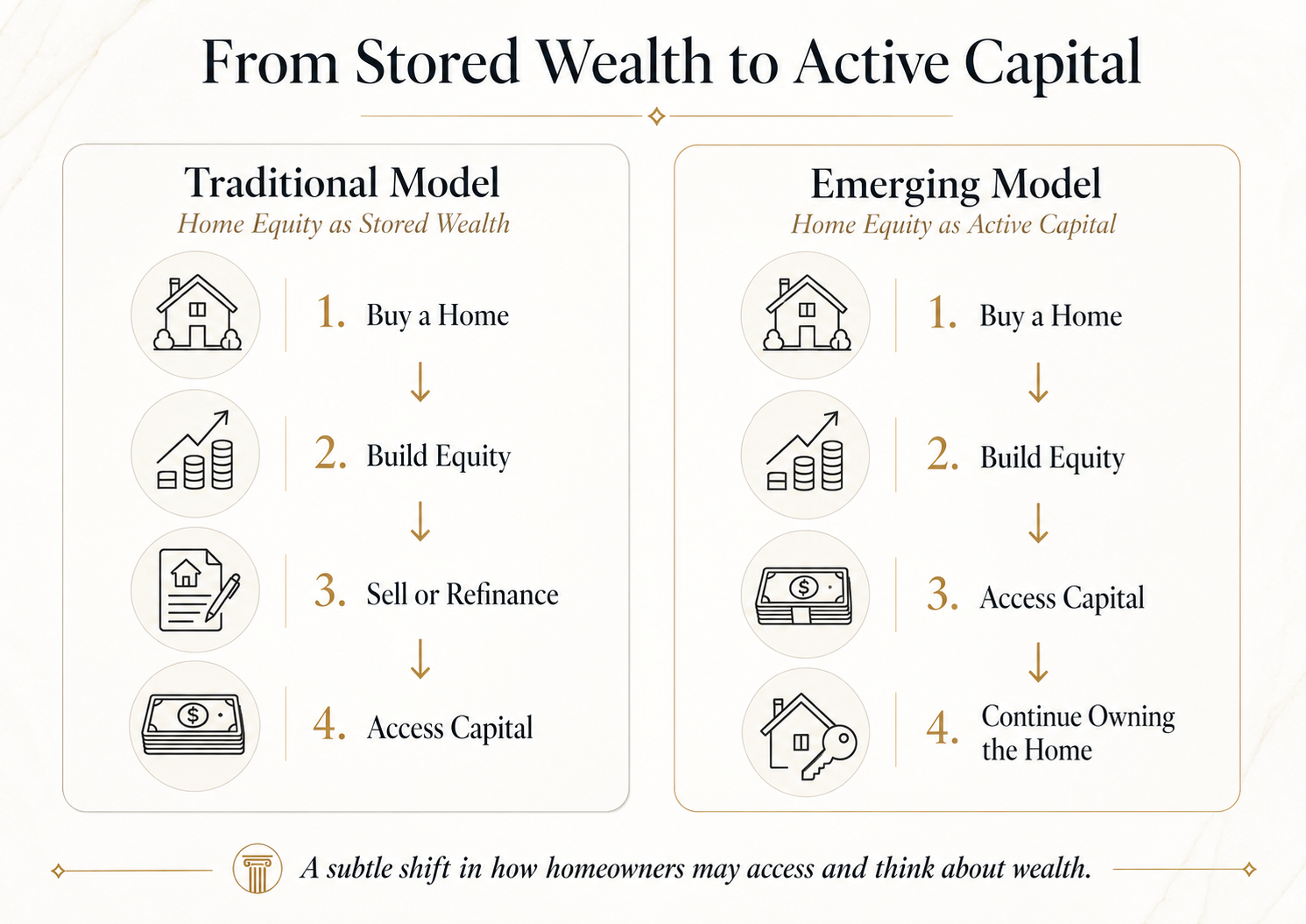
Home Equity Investment (HEI) agreements allow homeowners to receive a lump sum of cash in exchange for sharing a predetermined portion of their home's future appreciation—or, in some cases, depreciation. Unlike a traditional loan, homeowners retain ownership of the property and continue living in the home while remaining responsible for taxes, insurance, and maintenance.
For many affluent homeowners, the appeal isn't simply accessing cash—it's accessing liquidity without selling a highly appreciated property or replacing an existing low-interest mortgage.
The Bigger Story Isn't the Product...
It's the Shift in Thinking
Home Equity Investment agreements are interesting on their own, but they also point to something much larger.
Behind the scenes, many investment firms are pooling hundreds—or even thousands—of these agreements into diversified portfolios that can be sold to institutional investors such as pension funds, insurance companies, and asset managers. Much like mortgage-backed securities transformed mortgage lending decades ago, these equity-sharing agreements are beginning to create a new financial asset tied directly to residential home appreciation.
Although this market remains relatively small, it reflects a broader evolution.
Rather than viewing home equity as dormant wealth waiting for a future sale, affluent homeowners may increasingly begin viewing it as active capital—one component of a broader wealth strategy that can potentially support business investments, additional real estate acquisitions, private investments, or estate planning.
That's a meaningful shift in how luxury real estate fits into long-term wealth management.
What This Means for Luxury Real Estate Professionals
As affluent clients become more financially sophisticated, conversations around homeownership may become equally sophisticated.
Rather than asking: "Should I sell?"
Clients may increasingly ask:
- How does my home fit into my overall investment portfolio?
- Should I preserve my current mortgage?
- How can I access liquidity while maintaining ownership?
- When should I involve my wealth advisor or estate planner?
Luxury real estate professionals aren't expected to provide financial or investment advice.
However, understanding these emerging trends allows agents to recognize when broader wealth-planning conversations are taking place and confidently collaborate with a client's team of financial advisors, tax professionals, attorneys, and estate planners.
Related Reading: What Austin's Luxury Market Is Telling Us About Affluent Buyers explores how changing buyer behavior and evolving market dynamics are reshaping today's luxury real estate landscape.
The Future of Luxury Wealth May Start at Home
Whether Home Equity Investment agreements become widely adopted remains to be seen. These products involve important financial, legal, and tax considerations that homeowners should carefully evaluate with qualified professionals before making any decisions.
What's becoming increasingly clear, however, is that luxury homes are evolving beyond places to live or assets to eventually sell.
For many affluent homeowners, they are becoming increasingly integrated into broader wealth strategies—capable of providing liquidity, flexibility, and long-term financial opportunity without requiring a sale.
Understanding that shift doesn't require becoming a financial advisor. But recognizing it may become an important advantage as luxury clients continue to expect increasingly sophisticated conversations from the professionals they trust.
Continue Building Your Luxury Market Expertise
Luxury real estate is increasingly intersecting with wealth management, investment strategy, and changing affluent consumer behavior. Understanding these broader trends allows agents to provide more informed guidance while better serving today's high-net-worth clients.
The Institute for Luxury Home Marketing helps agents stay ahead through advanced education, industry-leading resources, and a global network of luxury real estate professionals.
Through the globally recognized Certified Luxury Home Marketing Specialist™ (CLHMS™) designation, exclusive Local Luxury Market Reports, and ongoing educational opportunities, members gain the knowledge and insights needed to navigate an evolving luxury market with confidence.